







Short answer: Anti tarnish jewellery is made from a metal that doesn't react with air, sweat and moisture, or coated with a protective layer that keeps those things away from the metal underneath. Anti-tarnish means tarnish-resistant, not tarnish-proof. It stays bright much longer than untreated brass or silver, but a coating can still wear through with time and friction.
That's the dictionary version. The more useful question is what the word means when it's printed on a product listing, because "anti-tarnish" gets used for everything from surgical steel that will outlive you to a lacquered brass pair that gives up after one humid monsoon. This guide explains the difference and how to tell which one you're buying.
First, what is tarnish?
Tarnish is a chemical reaction on the surface of a metal. It isn't dirt, and it isn't the metal breaking. It's a thin new layer forming where the metal meets the air.
- Silver reacts with sulphur compounds in the air (and in eggs, rubber bands, some cosmetics) and forms silver sulphide. That's the grey-black film on an old anklet. Sterling silver (925) is 92.5% silver and usually 7.5% copper, and the copper speeds this up.
- Brass and copper react with oxygen and moisture. They go brown first, then green. The green mark on your finger or earlobe is copper salts reacting with your sweat, not an allergy (though it can feel similar).
- Pure gold, platinum and good stainless steel barely react at all. That's why they're the starting point for real anti-tarnish pieces.
In India, the usual triggers are the everyday ones:
- Humidity, especially in the monsoon and in coastal cities like Mumbai, Chennai and Goa
- Summer sweat, which is salty and slightly acidic
- Perfume, deodorant and body mist sprayed right where a chain or earring sits
- Sunscreen, hair oil and hairspray
- Pool chlorine and sea water
- Storing pieces loose in a steel or plastic box where air moves freely
Related: how anti tarnish jewellery is made
What "anti-tarnish" actually means on a product label
When a brand calls a piece anti-tarnish, it's using one of two routes. The label rarely tells you which, and that's the part that matters.
Route 1: The metal itself doesn't tarnish
The piece is made from a metal that stays stable in air: stainless steel (usually 316L), titanium, or solid gold. There's no coating to wear off, so what you see is what you keep. Stainless steel stays bright because of its chromium, which forms an invisible oxide layer on the surface and repairs itself when scratched.
Route 2: The metal is protected by a barrier
The piece is made from a metal that would tarnish, usually brass, copper or silver, and it's sealed under something that doesn't. Common barriers:
- Gold plating, applied by electroplating or by PVD (physical vapour deposition, a vacuum process that bonds a harder finish, most often onto steel)
- Rhodium plating, a bright white metal from the platinum family, common on silver
- E-coating or clear lacquer, a transparent protective film over the finish
Route 2 pieces can look identical to Route 1 pieces on day one. The difference shows up at month six.
It means resistant, not proof
No honest brand can promise that a coated piece will never change. Plating is thin. Standard gold electroplating is often well under a micron thick, far thinner than a human hair. Every time a ring hits a desk or a bracelet slides over a laptop edge, a tiny amount comes off. "Anti-tarnish" means the process is slowed down a lot. It doesn't mean it's switched off.
There's no official standard behind the word
This one surprises people. In India, BIS hallmarking certifies the purity of gold and silver. It doesn't cover fashion jewellery coatings, and there's no official rule for how long an "anti-tarnish" piece has to last. Two products with the same label can be built very differently. That's why the questions in the next section are worth asking.
What the anti tarnish label does NOT promise
It's easy to read more into the word than it says. Anti-tarnish on its own does not guarantee that a piece is:
| What people assume | What's actually true |
|---|---|
| "It's waterproof" | Plain water splashes are usually fine. Soap, shampoo, chlorine and salt water wear coatings down much faster. Water-resistant is a fairer word for most coated pieces. |
| "It's permanent" | Solid stainless steel and titanium come close. Coated brass or silver will eventually show wear, usually on edges and clasps first. |
| "It's hypoallergenic" | Tarnish resistance and skin safety are separate things. A nickel-containing base can still irritate sensitive skin once the coating wears. |
| "It's real gold" | Gold-toned anti-tarnish jewellery is usually a gold finish. Real gold is hallmarked and priced very differently. |
| "It never needs care" | It needs less care. A quick wipe and dry storage still add months to its life. |
How to read an anti tarnish listing: 5 questions to ask
If you remember one section, make it this one. Before you buy anything labelled anti-tarnish, from us or anyone else, look for these five answers. If the listing doesn't give them, ask the seller. A brand that knows its product can answer in one line.
- What's the base metal? Stainless steel, titanium, brass, copper, or 925 silver? This tells you what happens if the finish ever wears through.
- How is the finish applied? PVD is generally tougher than standard electroplating. A clear lacquer alone is the lightest protection.
- How thick is the plating? Any mention of microns is a good sign. Vague words like "premium coating" tell you nothing.
- What does it say about water, sweat and perfume? Look for specifics ("remove before swimming"), not just "waterproof".
- What happens if it fades? Is there a return window, a replacement, or a replating option?
Here's a quick way to translate common listing phrases:
| If the listing says... | Ask or check... |
|---|---|
| "Anti-tarnish, long-lasting shine" | Base metal, and how the finish is applied |
| "18K gold finish" | Is it PVD on steel, or electroplated brass? |
| "Waterproof" | Shower? Pool? Sea? Gym sweat? |
| "Stainless steel" | Which grade (316L is the common jewellery grade)? Is it plated on top? |
| "Hypoallergenic / skin-safe" | Nickel-free? What's under the coating? |
Anti tarnish vs non tarnish, tarnish-free and waterproof: same thing?
Mostly, yes, but brands use these words loosely.
- Anti-tarnish, non-tarnish, tarnish-resistant: used interchangeably. All mean "designed to resist tarnish".
- Tarnish-free: a stronger claim. It's only really accurate for solid stainless steel, titanium, platinum or high-karat gold.
- Waterproof: a claim about water exposure, not about tarnish. A piece can be anti-tarnish and still not suit daily showers.
- 18K PVD: a finishing method plus a colour. It tells you more than "anti-tarnish" alone, because it tells you how the protection is done.
For a side-by-side of every material, with how long each typically lasts, see our full guide: what is anti tarnish jewellery: materials, lifespan and care
Four myths worth dropping
"If it's anti-tarnish, I can sleep, shower and swim in it."
You can with solid stainless steel. With coated pieces, every shower costs you a little plating. Take them off; it takes five seconds.
"Anti-tarnish means cheap."
It describes how a piece resists tarnish, not its quality. There's excellent anti-tarnish jewellery and very poor anti-tarnish jewellery. The five questions above sort one from the other.
"Once it fades, it's finished."
Many plated pieces can be replated by a local jeweller for a small cost, especially if the base metal is good.
"Silver tarnishes, so anti-tarnish can't be silver."
Silver can be anti-tarnish if it's rhodium-plated or sealed. The silver underneath still tarnishes; the barrier just keeps the air away from it.
Who anti tarnish jewellery makes the most sense for
Anti-tarnish pieces earn their price when you wear them often and don't want to think about them:
- Daily office wear: a chain, studs or a small bracelet you put on every morning
- Travel: no silver polish in the suitcase, and humid hotel bathrooms matter less
- Gifting: you can't control how the other person stores jewellery, so pick something forgiving
- Hot, humid cities: where untreated brass can darken within weeks
Earrings and pendants tend to last the longest in anti-tarnish finishes because they barely rub against anything. Rings and bracelets take the most friction, so they show wear first.
FAQ
What is the meaning of anti tarnish jewellery?
Anti tarnish jewellery is jewellery that resists darkening and discolouration. It's either made from a metal that doesn't react with air and sweat, like stainless steel, or coated with a protective layer, like gold plating, rhodium or lacquer, that keeps moisture and air off the metal underneath.
Does anti tarnish jewellery turn black?
Solid stainless steel and titanium don't. Coated pieces can darken slowly once the coating wears through, usually at edges, clasps and earring posts first. Wiping after wear and dry storage delay this significantly.
Is anti tarnish jewellery real gold?
Usually not. Most gold-toned anti-tarnish jewellery has a gold finish over steel or brass. Real gold jewellery in India carries a BIS hallmark and is priced by weight.
Can I wear anti tarnish jewellery every day?
Yes, that's what it's designed for. For the longest life, put it on after perfume and lotion, take it off before bathing, swimming or the gym, and store it in a closed pouch.
Are anti tarnish and non tarnish the same?
In practice, yes. Both mean tarnish-resistant. "Tarnish-free" is a stronger claim that only really applies to solid non-reactive metals.
The takeaway
Anti-tarnish is a useful label, but it's only half a sentence. The other half is what's underneath and how it's protected. Once you know that, you know how the piece will age.
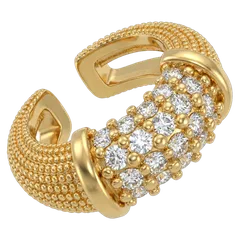
Browse our anti tarnish earrings and anti tarnish ear cuff, or explore the full earrings collection. Have a question about how a specific piece is finished? Message us and we'll tell you.
Ready to shop? Browse our bestsellers, the latest new arrivals or a complete jewellery set.
