


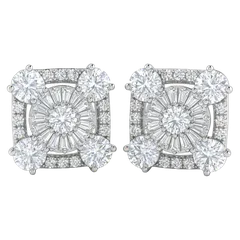
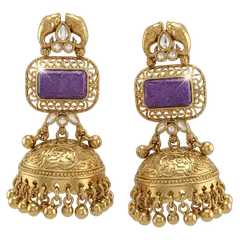
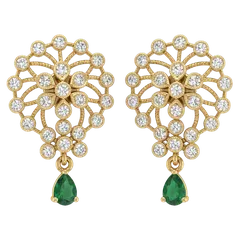
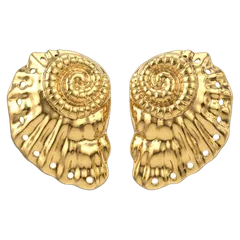
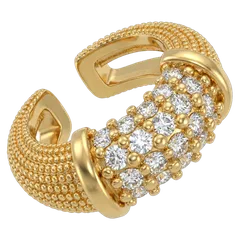

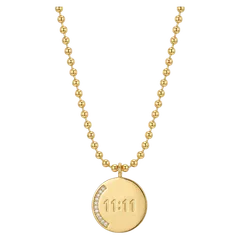
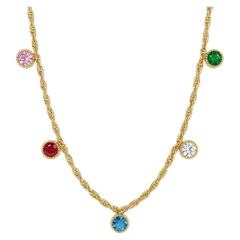
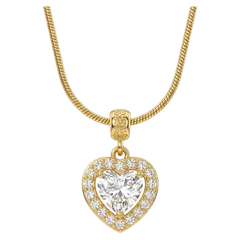




Short answer: Anti tarnish jewellery is jewellery built to resist the darkening and green discolouration that normal brass, copper and silver develop over time. It's made in one of three ways: from a metal that doesn't tarnish (like 316L stainless steel), with a hard finish bonded on top (like PVD gold), or with a plated finish sealed under a protective coat. How long it stays bright depends on which of the three you're holding.
If you only want the definition and what the label does and doesn't promise, read our shorter explainer on anti tarnish jewellery meaning. This guide is the practical one: materials, lifespan, water, and care.
How anti tarnish jewellery is made: the 3 methods
1. Start with a metal that doesn't tarnish
The most reliable anti-tarnish jewellery skips the problem at the source.
- 316L stainless steel is the standard jewellery grade. All stainless steel contains at least 10.5% chromium, which reacts with oxygen to form a thin, invisible chromium-oxide layer. That layer blocks further reaction and re-forms when scratched. Steel can pick up a dull film from skin oils, but a cloth takes it off.
- Titanium is lighter than steel and very skin-friendly. It's common in piercing jewellery.
- Solid gold and platinum barely react at all. Lower-karat gold (14K, 9K) contains more alloy metal and can dull slightly over the years.
2. Bond a harder finish on top (PVD)
PVD stands for physical vapour deposition. The piece, usually stainless steel, goes into a vacuum chamber where the finishing material is vaporised and deposited onto the surface as a thin, tightly bonded film. PVD finishes are generally harder and more scratch-resistant than standard electroplating, which is why "18K PVD on stainless steel" has become the go-to spec for everyday gold-toned jewellery.
The big advantage is what sits underneath. If a PVD finish on steel ever wears thin, you see steel, not green brass.
3. Plate, then seal
This is the most common method in fashion jewellery, and the one that varies most in quality.
- A base metal, usually brass or copper, is shaped and polished.
- It's electroplated: dipped in a solution while an electric current deposits a thin layer of gold, silver or rhodium onto it.
- It's sealed with an anti-tarnish layer, such as an e-coat (a clear film applied electrically) or a lacquer.
Done well, with thick plating and a good seal, this gives a rich finish at an accessible price. Done cheaply, with a flash of plating and no seal, it's the pair that turns your earlobe green by week three.
For reference, the US Federal Trade Commission's jewellery guides use a minimum of 2.5 microns of gold for the terms "heavy gold electroplate" and "vermeil". Many fashion pieces are plated far thinner than that, which is why thickness is worth asking about.
Anti tarnish materials compared
| Build | Tarnish resistance | Typical life with daily wear* | Water | Best for |
|---|---|---|---|---|
| Solid 316L stainless steel | Excellent | Years; effectively doesn't tarnish | Handles showers and sweat well | Everyday chains, rings, bracelets, watches |
| 18K PVD on stainless steel | Very good | Often several years before visible wear | Water-resistant; avoid chlorine and salt water | Gold-toned daily wear |
| Rhodium-plated 925 silver | Very good | Around 1-3 years before replating, depending on wear | Remove for swimming | White-metal rings and studs |
| Gold-plated brass + anti-tarnish seal | Good | A few months to a couple of years; depends heavily on thickness and care | Splashes fine; not for bathing | Statement and occasion pieces, earrings |
| Gold-plated brass, no seal | Low | Weeks to months | Keep dry | One-off events only |
| Untreated brass or copper | None | Darkens within weeks in humid weather | Keep dry | Oxidised or antique looks, on purpose |
*These are practical ranges, not guarantees. The same piece lasts very differently on a ring finger than as a pendant.
How long does anti tarnish jewellery last?
The honest answer is "it depends on friction more than time". A coating doesn't evaporate; it gets rubbed off. So where a piece sits on your body matters as much as how it's made.
The friction map, from shortest to longest life:
- Rings: they touch everything. Keyboards, steering wheels, doorknobs, dishwater. Rings show wear first, usually on the underside of the band.
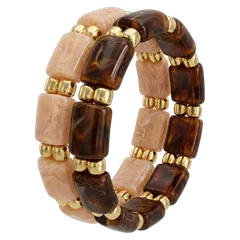
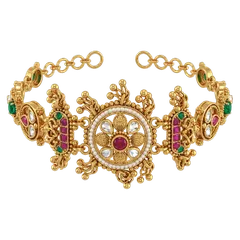
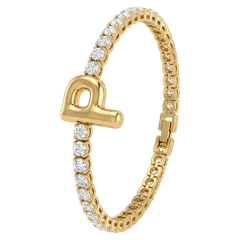
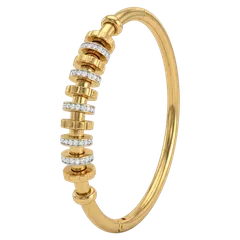
- Bracelets and kadas: they slide against desks and laptop edges all day.
- Chains: mostly safe, but the clasp and the back of the neck take sweat and hair friction.
- Pendants: they hang freely and rarely rub.
- Earrings and ear cuffs: almost nothing touches them. The post and hook see the most contact.
This is why an anti-tarnish earring can look new long after a ring with the same finish has faded. If you're buying your first anti-tarnish piece and want to see how it holds up, earrings are the easiest place to start.
What speeds up wear
- Perfume, deo and body mist sprayed directly on the jewellery
- Sunscreen and body lotion that hasn't soaked in
- Soap, shampoo and body wash (these are harsher than plain water)
- Pool chlorine and sea water
- Gym sweat plus friction
- Storing pieces loose so they scratch each other
Can you wear anti tarnish jewellery in water?
Most coated anti-tarnish jewellery is water-resistant, not waterproof in every situation. Plain water isn't really the problem. What's in the water is.
| Situation | Solid steel | PVD on steel | Plated + sealed brass |
|---|---|---|---|
| Washing hands | Fine | Fine | Fine; dry it after |
| Rain, sweat on a hot day | Fine | Fine | Fine; wipe it when you get home |
| Daily shower with soap | Fine | Better to remove | Remove |
| Swimming pool (chlorine) | Rinse after | Remove | Remove |
| Sea water | Rinse after | Remove | Remove |
| Gym workout | Fine | Wipe after | Remove |
The rule that covers all of it: last on, first off. Put jewellery on after you've finished getting ready, and take it off before anything wet, sweaty or chemical.
A 30-second care routine that adds months
You don't need a kit. You need a habit.
Every time you wear it
- Put it on after perfume, lotion, sunscreen and hairspray have dried.
- When you take it off, wipe it once with a soft, dry cotton or microfibre cloth. This removes sweat and oils before they sit overnight.
When you store it
- Keep each piece in its own small zip pouch or a closed box compartment. Less air means less tarnish, and pieces don't scratch each other.
- In the monsoon, drop a silica gel sachet (the ones that come in shoe boxes) into your jewellery box. It's the single most useful trick for humid Indian summers.
- Don't store jewellery in the bathroom.
When it needs a clean (every few weeks)
- Lukewarm water with a drop of mild soap, a soft brush for crevices, rinse, then dry completely before storing.
What not to use on plated pieces
- Toothpaste, baking soda or salt scrubs (abrasive; they remove plating)
- Silver dip or harsh polishing cream
- Ultrasonic cleaners
- Bleach or household cleaners
How to check anti tarnish jewellery at home
You can't measure coating thickness at home, but you can spot problems early.
- Read the listing again. The base metal and finish method tell you more than any home test. If they're missing, ask the seller.
- Do the white cloth test after a week of wear. Rub the piece firmly with a white cloth. Grey or black marks suggest silver reacting; green or brown suggests copper or brass showing through.
- Check the pressure points after a month. Look at earring posts, the inside of a ring band, clasps and edges. That's where wear shows first, and it tells you how the rest of the piece will age.
- Watch your skin. A green mark means copper is reaching your skin, so the barrier has worn through at that spot.
Is anti tarnish jewellery worth it?
Think in cost per wear rather than sticker price. Here's an illustrative example:
- A Rs. 199 pair of unsealed plated earrings that looks tired after 15 wears works out to about Rs. 13 per wear.
- A Rs. 449 anti-tarnish pair that still looks good after 200 wears works out to about Rs. 2 per wear.
The cheaper pair costs more once you count how often you can actually wear it. The exception is one-off pieces for a single event, where untreated fashion jewellery is perfectly fine.
FAQ
What is anti tarnish jewellery made of?
Usually one of three builds: solid 316L stainless steel; stainless steel with a PVD gold finish; or brass or copper that's gold- or rhodium-plated and then sealed with an anti-tarnish coat. The base metal decides how the piece looks if the finish ever wears.
How long does anti tarnish jewellery last?
Solid stainless steel can last years without tarnishing. PVD-on-steel often lasts several years of regular wear. Plated and sealed brass ranges from a few months to a couple of years, depending on plating thickness, where you wear it, and how you store it.
Is anti tarnish jewellery waterproof?
Most is water-resistant rather than fully waterproof. Plain water is fine, but soap, shampoo, chlorine and sea water wear coatings faster. Solid stainless steel is the exception and handles water well.
Why did my anti tarnish jewellery turn green?
Green means copper is reacting with sweat, which means the protective layer has worn through at that spot. It's common on earring posts and ring bands. Keep the piece dry and wiped, and consider replating if the base is good.
Can anti tarnish jewellery be replated?
Plated brass, copper and silver pieces can usually be replated by a local jeweller. PVD finishes are harder to redo at a small shop, but they also rarely need it.
Is anti tarnish jewellery safe for sensitive skin?
Often, but not automatically. Solid 316L steel and titanium are good choices for sensitive skin. With plated pieces, check what the base metal is and whether it's nickel-free, because that's what touches your skin once the coating thins.
The takeaway
Anti tarnish jewellery is only as good as what's under the shine. Solid steel lasts the longest, PVD on steel is the best everyday gold look, and plated-and-sealed pieces give you the most design for the price if you look after them. Whichever you choose, "last on, first off" and a dry pouch do most of the work.
Start with pieces that take the least friction: our anti tarnish earrings and anti tarnish ear cuff, or browse daily wear earrings and chains for women.
Explore pieces by category: gold chains, bangles and kada and rings.
