


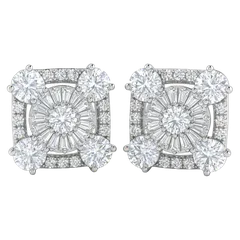
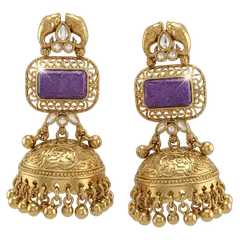
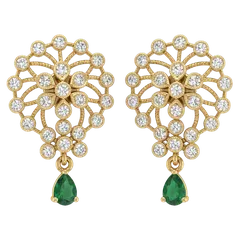
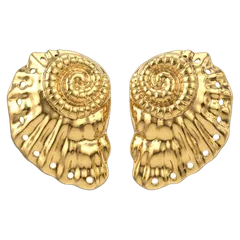


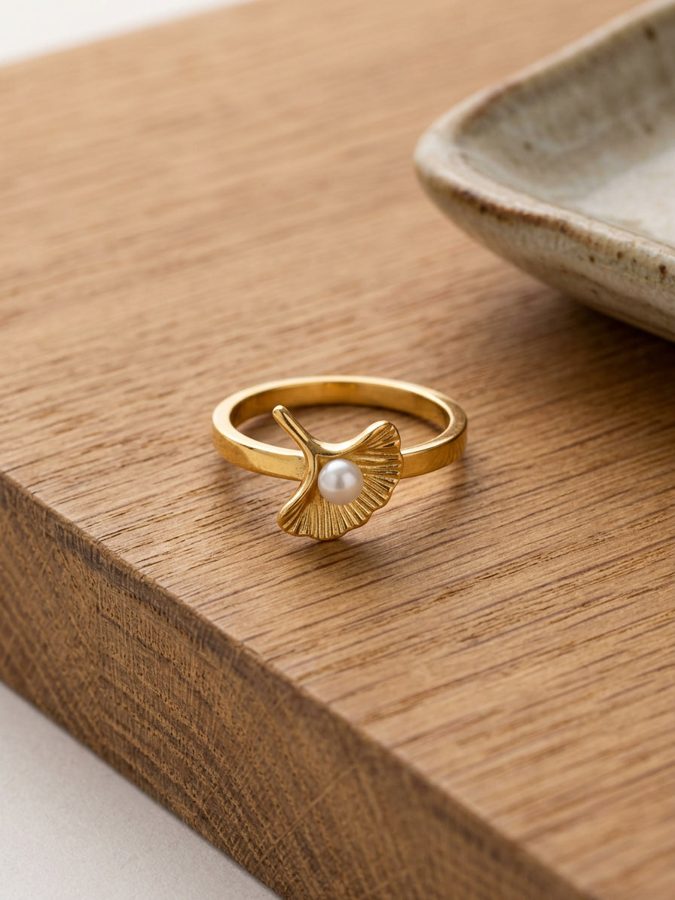


Short answer: Statement earrings are earrings designed to be the first thing people notice about your look. They stand out through size, length, colour, shape or movement, and they're usually worn as the main piece of jewellery, with everything else kept quiet. Jhumkas, chandbalis, long drops, chandeliers, ear cuffs and oversized studs can all be statement earrings.
The meaning is simple. Knowing whether a particular pair counts, and what to do with the rest of your outfit once you're wearing it, is where people get stuck. That's what this guide covers.
What does "statement earrings" mean?
A statement earring is defined by its job, not by a fixed size. Its job is to be the focal point. A pair gets there through one or more of these:
- Scale: it's noticeably bigger or longer than an everyday stud or small hoop. In Indian jewellery, a drop that falls well below the lobe (think 5 cm or more) is usually read as a statement.
- Colour: bold stones, enamel (meenakari), or a contrast against your outfit.
- Shape: sculptural, geometric, floral, asymmetric; anything the eye doesn't skip over.
- Texture and detail: kundan settings, filigree, layered stones, fringe.
- Movement: pieces that swing, like chandbalis, danglers and tassels, catch light and attention every time you turn your head.
A pair doesn't need all five. A single oversized kundan stud is a statement. So is a slim ear cuff climbing the whole ear.
It's relative to the outfit
The same pair can be a statement one day and background the next. Chunky gold hoops are a statement with a plain white shirt. With a heavily embroidered lehenga, they disappear. Statement is about contrast with everything else you're wearing.
The necklace test
Here's a quick way to tell: if putting these earrings on makes you want to take your necklace off, they're statement earrings. If you'd happily wear a necklace, bangles and a ring with them, they're everyday earrings.
Statement earrings vs everyday earrings
| Everyday earrings | Statement earrings | |
|---|---|---|
| Role in the look | Finishing touch | Main feature |
| Typical size | Studs, small hoops, short drops | Long drops, wide studs, cuffs, chandeliers |
| Paired with | Other jewellery freely | A quiet neckline, little else |
| Weight | Barely noticeable | Can be noticeable; comfort matters |
| When | Work, errands, all day | Events, evenings, festive days, or a deliberate everyday look |
Types of statement earrings
Indian statement earrings
- Jhumka: the bell-shaped drop, often with pearl or bead fringe at the base. It moves, it's recognisable across India, and it suits both a saree and a plain kurta.
- Chandbali: a crescent-moon silhouette, usually with stones, pearls or meenakari. It frames the face and flatters most face shapes. See our Kashmiri chandbali earrings.
- Kashmiri dejhoor-inspired earrings: the traditional dejhoor is a pair of gold pendants worn by married Kashmiri Pandit women, hung from the upper ear on a thread or chain called an atah. Modern dejhoor-inspired earrings borrow that long, chained drop shape as a statement piece for festive wear. Browse Kashmiri jhumka and dejhoor designs.
- Kundan and polki studs: wide, flat, stone-set studs that make a statement without any length. They're a good pick if long earrings feel too much.
- Temple jewellery earrings: antique gold finish with deity or temple motifs, classic with silk sarees.
- Ear chains (sahara / kaan chain): a chain from the earring into the hair, which is both decorative and practical for heavy pairs (more on that below).
Western and contemporary statement earrings
- Long drops and shoulder dusters: linear pieces that fall to or near the collarbone.
- Chandeliers: tiered, branching drops that widen at the bottom.
- Oversized hoops: large or chunky hoops, often in gold.
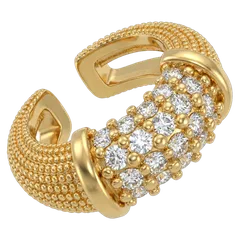
- Ear cuffs and climbers: they wrap or climb the outer ear, often without a second piercing. See our ear cuff collection and the premium statement ear cuff.
- Tassel and fringe earrings: movement-led, usually colourful and light.
- Sculptural and geometric: abstract metal shapes, often lighter than they look.
- Mismatched pairs: two different earrings worn on purpose.
Choosing statement earrings for your face shape
Face shape isn't a rule. It's a way to narrow choices when you're stuck. The idea is to add what the face doesn't already have: length to a round face, softness to an angular one.
| Face shape | Try | Go easy on |
|---|---|---|
| Round | Long drops, linear danglers, elongated jhumkas, chandbalis with a vertical drop | Big round hoops and wide round studs that repeat the face's shape |
| Oval | Almost anything; this is the easiest shape to dress | Very long pieces that make the face look longer |
| Square | Curved shapes: chandbalis, hoops, teardrops, jhumkas | Sharp geometric and boxy shapes that echo the jawline |
| Heart | Styles wider at the bottom: chandeliers, jhumkas, teardrops | Top-heavy pieces and large studs |
| Long / oblong | Wide studs, cuffs, chunky hoops, short full drops | Very long shoulder dusters |
Two practical notes that matter more than face shape: hair and neck. Statement earrings get lost under open hair and compete with high collars. A low bun, a sleek ponytail or hair tucked behind one ear does more for a statement pair than choosing the "right" shape.
How to wear statement earrings
1. Give them the stage
Let the earrings be the loudest piece. Skip the necklace or wear a very fine chain, and keep rings and bracelets simple. If you want to layer a necklace too, choose earrings and necklace from different "volume levels": statement earrings with a delicate chain, or a statement necklace with studs.
2. Match the neckline
| Neckline | Works well with |
|---|---|
| Boat neck, off-shoulder, strapless | Long drops, chandeliers, chandbalis: the open space above the shoulder is made for them |
| Deep V or sweetheart | Medium drops or statement studs, with an optional thin chain |
| High-neck or collared saree blouse | Studs, cuffs or short jhumkas that don't touch the collar |
| Turtleneck or high collar | Studs, cuffs or short bold drops |
| Kurta with dupatta | Jhumkas and chandbalis, with the dupatta pinned on one shoulder so it doesn't catch |
| Collared shirt | Chunky hoops or a sculptural stud |
3. Pick colour on purpose
Either match the earrings to one small colour in your outfit, like the border of a saree or a print in a kurta, or keep them metal-only (gold or silver) so they work with anything. Coloured stones against a plain outfit are the easiest win.
4. Dress them for the occasion
- Haldi and mehendi: colour and movement. Meenakari, tassels, pastel stones. Keep weight low; you'll be dancing.
- Sangeet: chandbalis and long danglers that swing.
- Wedding day: Kashmiri and kundan pieces, heavier jhumkas, with ear chains if needed.
- Reception and parties: stone-set and AD (American diamond) drops that catch light.
- Office: statement studs, small sculptural pieces or a single ear cuff. Bold, but they won't swing into your headset.
- Everyday: a bold stud or chunky small hoop with a plain T-shirt or shirt. This is the easiest way to try statement earrings if you're new to them.
5. Wear one ear louder than the other
A statement stud on one side and an ear cuff on the other, or one long drop with hair swept to that side, feels current and uses half the weight.
How to wear heavy statement earrings without hurting your ears
A lot of people stop wearing statement earrings because of the pain, not the style. Most of it is avoidable.
- Check the weight before you buy. If the listing mentions "lightweight", that matters more than it sounds. Hollow and resin designs can look large without pulling on the lobe.
- Use support backs. Wide silicone or disc backs spread the weight across the back of the lobe instead of one small point, and keep the earring facing forward instead of drooping.
- Add an ear chain (sahara). A chain from the earring clipped into your hair takes much of the weight off the lobe. It's a traditional Indian fix and still the best one for bridal jhumkas.
- Try clip-ons or cuffs. No piercing, no pull on a hole. Our clip-on earrings are an easy option for unpierced or sensitive ears.
- Set a time limit. Wear heavy pairs for the event, then swap to studs for the drive home. Never sleep in them.
- Watch for warning signs. If your piercing looks longer or more slit-shaped than it used to, give heavy earrings a break. Stretched lobes are much easier to prevent than to fix.
- Mind the post. On sensitive ears, the post matters more than the design. Anti-tarnish and nickel-free posts reduce irritation. Read more in what is anti tarnish jewellery.
Common mistakes with statement earrings
- Wearing two statements at once: heavy earrings plus a heavy choker usually cancel each other out.
- Hiding them: open, voluminous hair over long drops.
- Ignoring the dupatta: fringe and hooks snag on net and embroidered dupattas. Pin it away from the ear.
- Choosing weight over comfort for long events: a lighter pair you enjoy for eight hours beats a stunning pair you take off after one.
- Matching everything: earrings, necklace, bangles and ring all in the same set can look heavy. Breaking the set usually looks more personal.
FAQ
What is the meaning of statement earrings?
Statement earrings are bold earrings meant to be the focal point of an outfit. They stand out through size, length, colour, shape or movement, and are usually worn with little or no other jewellery near the face.
How do I know if my earrings are statement earrings?
Use the necklace test: if wearing them makes you want to skip a necklace, they're statement earrings. Size helps too; drops that fall well below the lobe or wide, stone-set studs usually count.
Can I wear statement earrings with a necklace?
Yes, if one of the two stays quiet. Pair statement earrings with a thin chain, or a statement necklace with small studs. Two heavy pieces tend to compete.
Can I wear statement earrings to the office?
Yes. Choose statement studs, small sculptural shapes, chunky small hoops or a single ear cuff. Avoid long swinging pieces that catch on headsets, collars or lanyards.
Are statement earrings still in style in 2026?
Yes. Bold earrings have stayed a staple, especially oversized studs, ear cuffs, sculptural gold shapes and traditional Indian styles like jhumkas and chandbalis worn with everyday clothes.
Are ear cuffs statement earrings?
They can be. A large or stone-set ear cuff that covers much of the outer ear is a statement piece. A thin, minimal cuff is closer to everyday wear.
The takeaway
Statement earrings mean letting one piece do the talking. Pick a pair that stands out against what you're wearing, clear space around it with your neckline and hair, and plan for comfort if it's heavy.
Browse the earrings collection, traditional pieces in Indian earrings, or start with a festive favourite like the gold long chain Kashmiri drop earrings.

